What to Expect at the Fukuoka Grand Sumo Tournament
How a tournament day runs, what to wear, whether you can bring food, and the hour-by-hour schedule for the Kyushu Basho in Fukuoka.
A day at the Kyushu Basho runs long: doors open at 8:45 on most days, and the last bout ends just before six in the evening. Nobody sits through all nine hours. The lower-ranked divisions fight through a quiet morning hall, and the afternoon is where the tournament fills in and the familiar ranks finally step onto the clay.
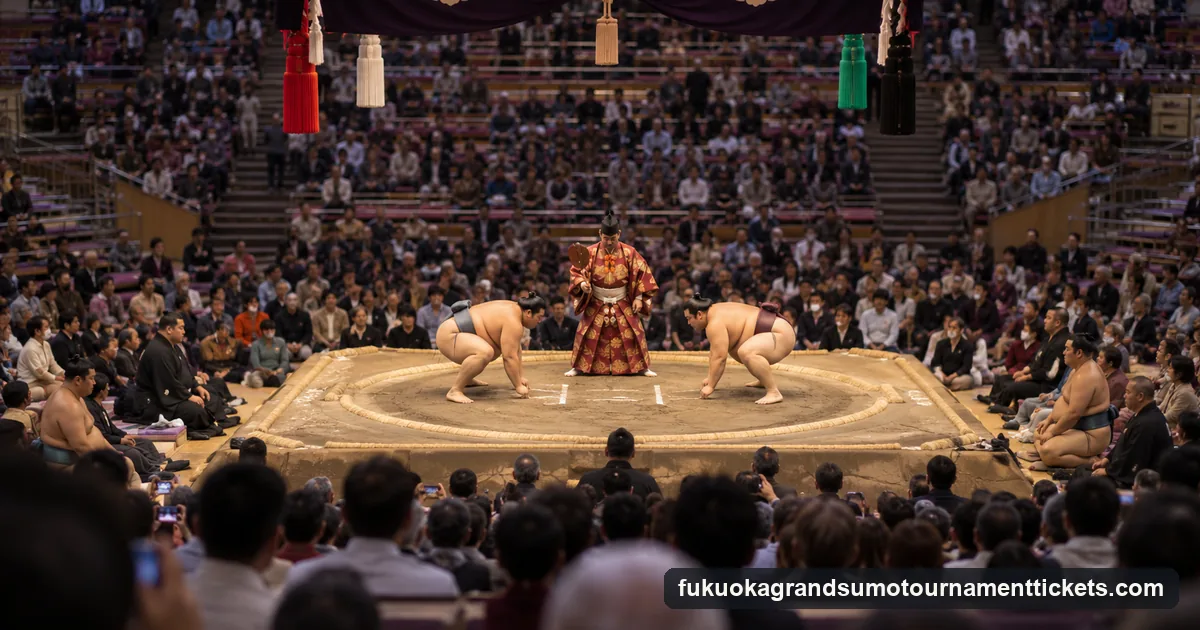
Yummy Guide inc.’s tour, pinned on this page, gets you a chair seat and a guide who runs through exactly this before you go in: the ranks, the rituals, what to watch for. It’s $634 on the booking platform when we checked. It has no reviews yet, and the guide’s part ends at the gate. Once you’re seated, you’re watching on your own.
A tournament day, hour by hour
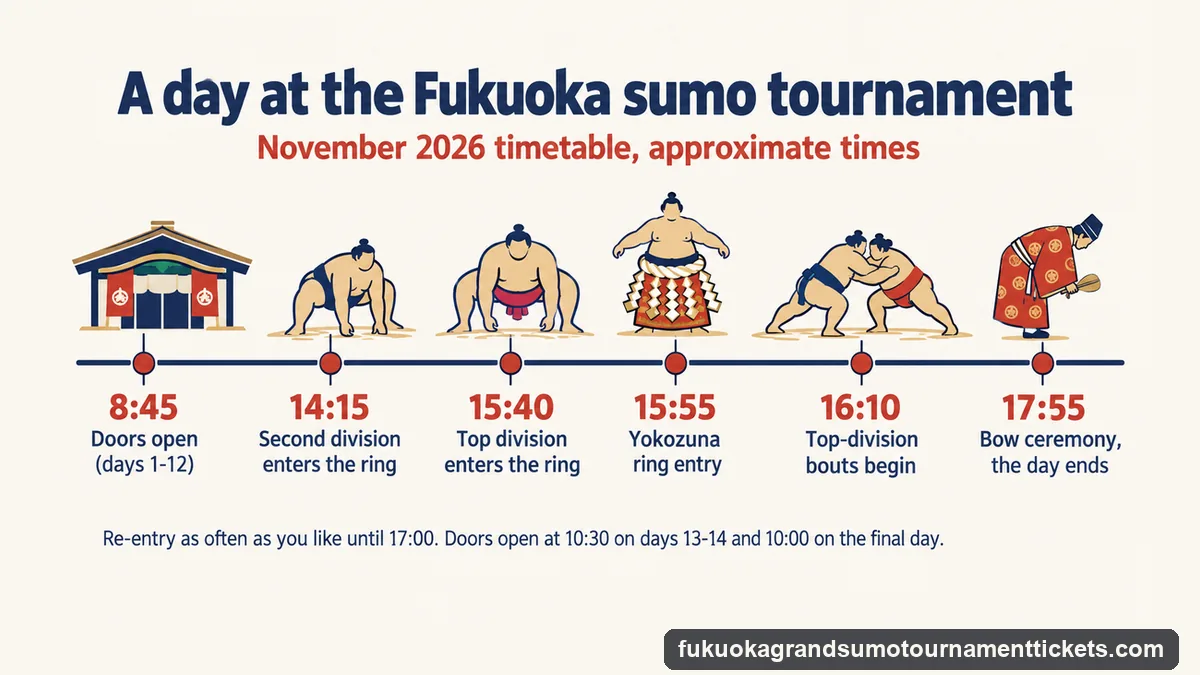
These times are the association’s own “rough guide,” not a timetable to the minute.
| Time | What happens |
|---|---|
| 8:45 | Doors open on days 1 to 12 (10:30 on days 13 and 14, 10:00 on the final day) |
| About 9:15 to 9:25 | The four lower divisions fight in a hall that’s still mostly empty |
| About 14:15 | Juryo, the second division, enters the ring in its ceremonial aprons |
| About 15:40 | Makuuchi, the top division, enters the ring (15:30 on day 1, 15:15 on the final day) |
| About 15:55 | The yokozuna’s own ring-entering, flanked by a sword-bearer and a dew-sweeper |
| About 16:10 to 17:55 | The top-division bouts, ending with the bow ceremony |
How a tournament works
Fifteen days. Every top-division wrestler fights once a day, against a different opponent each time, while the lower divisions fight only seven times across the tournament. Whoever finishes with the best record takes the Emperor’s Cup on the final day, and a tie goes to a playoff.
A bout itself is short and simple to judge, even if it isn’t always simple to see coming. It ends the moment one wrestler is pushed out of the ring or touches the clay with anything other than the soles of his feet, even a single fingertip or the tip of his topknot. There are no weight classes, so a smaller wrestler can and does face a much larger one, and strikes with a closed fist, hair-pulling, choking and kicks to the head or chest are all barred.
What should I wear?
No official dress code turned up in anything we checked. A box seat means shoes off and sitting cross-legged on a floor cushion for however long you stay, so dress for that if that’s your ticket; a chair seat is just a seat. Fukuoka turns cold by evening in November, so bring a layer.
Can you bring food?
You eat at your own seat, not at ringside, and you buy bento, snacks and drinks inside the hall or from the food trucks outside. Cans, bottles and cool boxes stay outside too.
Coming and going, and the ranks on the day
Fukuoka lets you leave and come back as often as you like until 17:00, through the re-entry gate, as long as you keep your ticket. That’s looser than Tokyo’s rule, which allows only one re-entry. Flash photography isn’t allowed, ringside needs the organiser’s permission for any photo, and the association asks fans not to linger at the exits hoping to meet a wrestler; you may still spot one in a yukata on a bus or in a restaurant around town during the tournament.
On the ranking list in place when we checked, the yokozuna were Onosato and Hoshoryu and the ozeki were Kirishima, Kotozakura and Aonishiki. The November list comes out on 26 October, so treat any name before that as September’s rank, and treat any star appearance as normal rather than guaranteed even after: wrestlers withdraw mid-tournament, as Onosato did on the final day in 2025.
The bout sheet handed out at the door is in Japanese, with no English version that we found. For a running translation, the Japan Sumo Association’s own app carries English wrestler profiles and daily highlight clips, and NHK World streams live English commentary on days 1, 8, 14 and 15. Either is worth bookmarking before you go in, since nobody at the venue is going to narrate it for you once your guide’s briefing ends.
Check dates for the guided seat
Fukuoka Kokusai Center covers getting to the venue and what’s inside it, and Fukuoka sumo ticket prices breaks down what each seat class costs. Every tour on this site is on the homepage.
Sources: the Japan Sumo Association’s 2026 Fukuoka spectator notes and daily timetable, checked October 2026.
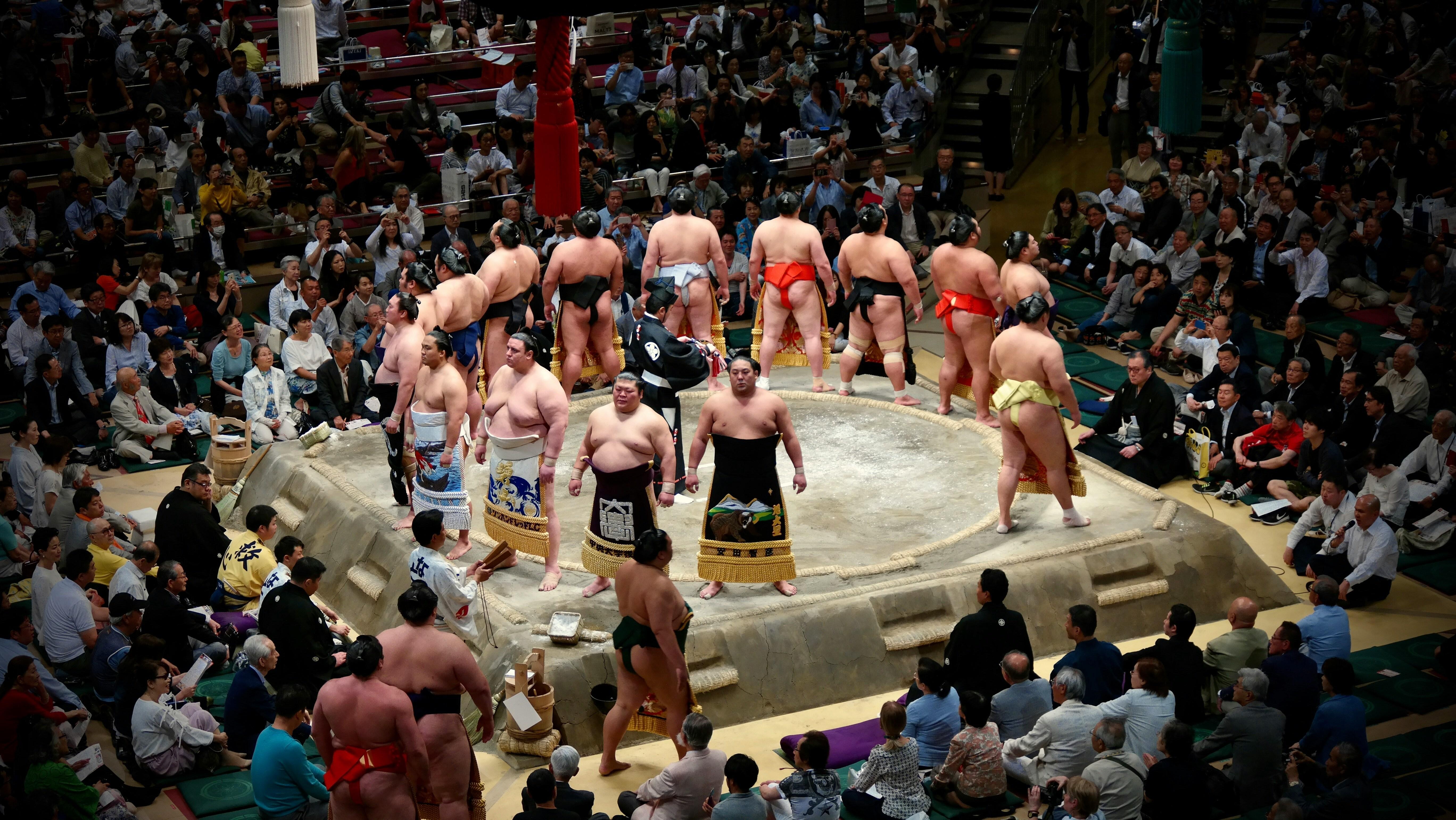
Book the Guided Sumo Tournament Tour
Yummy Guide's chair-seat ticket to the November Grand Sumo Tournament comes with a local English-speaking guide for the pre-entry briefing and admission help, then leaves you to watch from your own seat. Free cancellation up to 24 hours before. There are no reviews yet, and the official general sale is already marked sold out.
Check Availability & Book